

Table of Contents
Table of contents
1. Create and Follow a Detailed Budget
2. Prioritise Paying Down High-Interest Debt
3. Build or Boost Your Emergency Fund
4. Automate Your Savings and Investments
5. Keep Track of Your Finances as the Year Goes On
Understanding Where You Stand Financially
After spending more than planned over Christmas, many people start the new year with a closer eye on their finances. Credit balances might be higher, savings may have taken a dip, and the months ahead can feel longer than expected.
Looking ahead to 2026, it’s natural to want things to feel more manageable. That doesn’t always mean drastic changes. Often, it starts with understanding where your money is going and making a few practical adjustments.
This guide sets out five ways to manage your money more effectively in 2026. The focus is on realistic steps that can help reduce pressure and give you a clearer sense of control as the year unfolds.
1. Create and Follow a Detailed Budget
Start by listing what comes in each month, then write down everything that goes out. That includes rent or mortgage, utilities, food, travel, insurance, subscriptions, and irregular costs that do not show up every month.
Seeing the full picture can feel uncomfortable at first. It can also be clarifying. Once everything is written down, it becomes easier to see where money is being stretched and where small changes might help.
A budget does not need to be perfect. It needs to be realistic. Reviewing it regularly and adjusting when costs change will help it stay useful rather than restrictive.
2. Prioritise Paying Down High-Interest Debt
High-interest debt can quietly keep finances under strain. Credit cards, overdrafts, payday loans, and some store cards often grow faster than expected, even when payments are being made.
Listing your debts clearly can help you regain a sense of control. Note the balance, interest rate, and minimum payment for each one. This can make it easier to decide where to focus first.
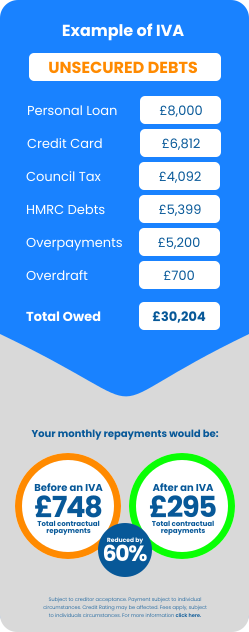
Many people choose to prioritise the debts with the highest interest, as this can reduce how much is paid overall. If repayments already feel difficult, it may be worth looking at debt solutions that bring payments into one manageable amount.
Support at this stage can help prevent the situation from becoming harder to manage later on.
3. Build or Boost Your Emergency Fund
Unexpected costs have a habit of arriving at the worst possible time. An emergency fund can help reduce reliance on credit when something goes wrong.
This does not need to start large. Even a small amount set aside can help cover urgent expenses without adding to existing debt.
Keeping emergency savings separate from everyday spending can make it easier to protect. Over time, you can build this buffer gradually, at a pace that feels realistic.
Having money set aside for the unexpected can reduce stress and make financial setbacks easier to handle.
4. Automate Your Savings and Investments
When money is tight, saving can slip down the priority list. Automating savings removes some of the decision-making from the process.
Setting up automatic transfers to savings or longer-term plans means money is put aside before it has a chance to be spent. This can help savings build steadily, even in small amounts.
Automation works best when it fits your situation. Starting with a manageable amount can prevent extra pressure on your day-to-day finances. You can review and adjust it as things change.
5. Keep Track of Your Finances as the Year Goes On
Money problems rarely arrive without warning. More often, things start to feel tighter before they become unmanageable. Payments still go out, bills are covered, but there’s less flexibility than there used to be.
Keeping track of your finances can help you spot these changes early. That might mean checking your bank balance more regularly, reviewing your budget each month, or noticing when you’re relying on credit to get through.
Catching these signs early gives you more options. It allows you to adjust spending, prioritise payments, or look for support before pressure builds further.
If something no longer feels sustainable, that feeling is worth paying attention to. Acting sooner can make the next steps clearer and less stressful.
Understanding Where You Stand Financially
Having a clearer picture of your finances can help, even if nothing changes straight away. Knowing what’s coming in, what’s going out, and where pressure points sit can give you a better sense of direction.
That understanding can support more informed decisions, whether that means adjusting spending, reviewing repayments, or looking for advice.
It may not solve everything, but it can make the next steps feel less daunting.
Get Support With Debt
If managing your money still feels tricky, you don’t have to work it out on your own. We offer free, confidential debt advice for people who want a clearer way forward.
From council tax and credit card debt to utility and BNPL debt – we can help. Our advisers can talk through your situation, explain the options available, and help you understand what might be a realistic path for you. Start getting your finances back on track and speak to our team today.