

Table of Contents
- The Reality of Rising Rents in the UK
- How Rising Rent Causes Debt
- Warning Signs That High Rent is Pushing You Into Debt
- What You Can Do If Rising Rent is Causing Debt
Rent is one of the biggest household bills people pay in the UK today. Rising costs leave many renters paying a significant portion of their income for their property, with less available for other important essentials.
In fact, according to the latest annual review by the Chartered Institute of Housing, rent reached a staggering 36.1% of average earnings in March 2025. With other household bills also costing more, people are finding themselves going into debt just to be able to live on a monthly basis.
If you’re feeling the impact of rising rent, you’re certainly not alone. In this guide, we explore:
- Why rent increases are pushing more people into debt
- The warning signs to look out for
- Steps you can take to regain control of your finances
The Reality of Rising Rents in the UK
While the pace of rent increases has started to stabilise, since 2020 in particular, housing costs have soared, putting growing pressure on household finances.
According to the Office for National Statistics, the average monthly rent for private renters in the UK is £1,374 (as of February 2026).
At the same time, wages haven’t been increasing at the same rate as rising rent. This leaves many tenants potentially over a third of their monthly income on rent, much more than what is considered to be affordable.
They then have to figure out how they are going to afford the remaining essentials they need which have also seen significant price hikes.
Even slight rent increases can have big ripple effects on daily finances. As cost pressure builds, so does the risk of falling into debt.
How Rising Rent Causes Debt
Increasing rent costs are one of the main drivers behind cost of living debt. Many renters feel they need to use credit cards, overdrafts, buy now, pay later, and loans, to cover the gap between income and housing costs.
Less disposable income
Higher rent means there is less money available to spend on anything else, even other essentials like food, transport, and energy bills.
This means they are unable to save or have any room left in their budget for unexpected expenses or the ability to be flexible with their finances. One large cost could easily leave someone in debt when they have little income left over from paying rent.
Increased reliance on credit
When their income is unable to stretch far enough, many people start to rely on credit to cover their basic necessities. This may include using a credit card for grocery shopping, going into an overdraft, or taking out a short-term loan.
While this may provide relief temporarily, it establishes a cycle where balances grow over time as you become unable to repay the credit you have borrowed. Interest adds further pressure, making it feel impossible to break away from the debt.
Falling behind on essential bills
As financial pressure starts to build, it can become harder to keep up with regular bills. Even if their rent is paid, some households may start to fall behind on other bills like energy, council tax, or water.
This can quickly escalate into serious debt if you’re missing multiple payments across several bills. You may encounter additional charges for late payments or face enforcements such as County Court Judgements (CCJs).
Rent arrears as “priority debt”
Due to rent increasing faster than wages, tenants are falling into arrears. This is considered to be a “priority debt”, which means if it’s left unpaid, it will result in eviction from the property.
Rent is often one of the first bills to get paid for many people, to avoid the risk of becoming homeless. However, this increases debt in other areas as renters struggle to cover other essential costs.
Warning Signs That High Rent is Pushing You Into Debt
Falling into debt can be a slow process that feels manageable at the start. You make small purchases for food or transport that you feel you can pay back.
Many people don’t realise it’s happening until they owe large sums of money. Below are some warning signs that your high rent costs are pushing you into debt.
- Using credit for everyday costs
- Missing payments regularly on your essential bills
- Increasing balances on credit cards, overdrafts, or arrears
- You’re feeling more stressed about money
What You Can Do If Rising Rent is Causing Debt
If higher rent costs are affecting your finances, there are steps you can take to regain control. It may feel overwhelming, but small and practical actions can make a big difference over time.
Review your budget
It’s important to have a clear understanding of your monthly incomings and outgoings, as you may be able to find areas where you can afford to cut back.
Start by prioritising your essential bills and calculate how much money you may be spending on ‘nice to have’ extras. Even the smallest change could help to ease the pressure over time or reduce your reliance on credit.
Speak to your landlord
If you’re struggling with rent payments, it’s best to speak to your landlord early before things spiral. Many landlords are more open to payment discussions than you might assume, especially if you raise the issue before any rent is missed.
You may be able to agree on a temporary arrangement, such as a revised payment schedule, which will ease the pressure and allow you to get back on track.
Seek expert debt advice
If you’re relying on credit cards and falling behind on payments, getting professional support as soon as possible can be extremely beneficial.
At PennyPlan, we provide free, non-judgemental advice to anyone who is struggling with debt. Our friendly team is on hand to help with advice and debt management solutions as required.
Consider formal debt options
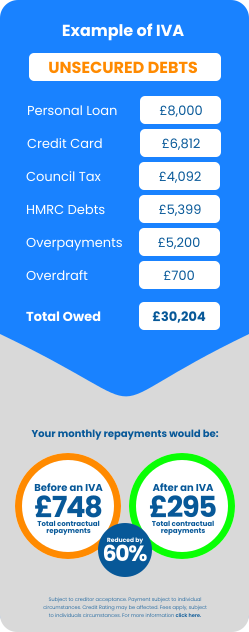
In some cases, further debt support may be needed. This could include a debt management plan or an IVA (Individual Voluntary Arrangement).
Debt management plans and IVAs are designed to help repaying debt more manageable by reducing monthly payments or freezing interest.
The right solution will depend on your individual situation, which is why it’s best to get tailored advice before making any decisions.
Take Control of Your Finances and Mental Health
Rising rent costs have had a serious impact on renters, with many turning to credit simply to cover their monthly essentials.
Once you’re in debt, it can feel impossible to get out, but you’re not alone. If you’re struggling with high rent and are facing debt it’s important to seek help sooner rather than later.
Get the help and advice you need from PennyPlan. Take the first step towards a better financial future and speak to our team today.