

Stress and anxiety about finances are extremely common in the UK today. In fact, statistics from the last year have shown that more than 5 million adults experience some form of financial stress. The main causes of this are the rising cost of living, debt, and stagnant wages that haven’t kept pace with inflation.
When stress levels become too high, it can feel like it’s taken over your life, manifesting into physical symptoms. Sleepless nights, loss of appetite, muscle aches and pains, all rooted in anxiety around money. But it doesn’t have to be like that.
Your mind is powerful, and with the right practices, you can help manage the emotions you feel about your finances. With a clearer mindset, it becomes easier to take control and start getting your life on track.
Understanding The Link Between Money And Anxiety
Money is a core part of our daily lives. We cannot function without it. So it’s no surprise that there’s such a strong link between finances and emotional response. If you’re struggling to keep up with household bills, trying to manage debt repayments, or dealing with unexpected expenses without savings to fall back on, it creates an ongoing stress that’s always on your mind. Even if you’re not actively thinking about it all the time.
A driving factor behind money worries feeling so overwhelming is the uncertainty that comes with them. Uncertainty leads to playing out scenarios and questions in your head. What happens if I can’t make my debt repayment this month? Am I going to lose my home because I can’t keep up with my bills? I’m so far into a financial hole, how do I get out?
It’s easy to spiral until those worries take up a lot of space in your mind and you can’t switch them off. Thinking about the future can be scary and stressful when you’re dealing with financial hardships now.
Financial stress can also feed bad habits, creating cycles of negative patterns that make it harder to regain control and stability. Particularly, it encourages avoidance behaviours. Worrying about money can become so overwhelming that it’s too intimidating to face.
You stop checking bank balances, opening bills, reviewing budgets, or potentially seeking advice. This is a completely normal reaction, but oftentimes it ends up not making you feel any better. The unanswered questions and unresolved problems start to mentally take a toll over time.
For some people, the ripple effect of the anxiety stretches beyond just finances. The stress can start to impact your confidence, relationships, work performance, and your general wellbeing. Worries about providing for a family, maintaining a home, or achieving personal goals can feel like unmanageable responsibilities. Adding an extra emotional layer to financial challenges.
Always keep in mind that you’re not alone. Many people experience financial difficulties and have the same emotions around them. Acknowledging your feelings is a positive first step towards managing them effectively, instead of burying your head in the sand.
Mindfulness can’t take away the financial stress you’re experiencing. But it can help you develop a calmer, more rational, and balanced response to money worries.
What Is Mindfulness?
Mindfulness is a practice to support mental wellbeing by paying attention to the present moment with full awareness and without judgment. Instead of thinking too much about what’s happened in the past or worrying about what’s going to happen in the future, mindfulness focuses on living in the moment.
This can be really beneficial when it comes to financial stress because it’s easy for your mind to run away with “what if” scenarios, thinking ahead into the future. Or dwelling on past decisions that may have led to a change in financial circumstances you’re experiencing now. The purpose of mindfulness isn’t to get rid of those thoughts completely. It’s to help you recognise them without the thoughts and feelings becoming too overwhelming.
Many people associate mindfulness with meditation, but mindfulness can be practised in simple, everyday ways. It doesn’t have to be specifically planned or outside of your normal routine. Activities like taking a mindful walk, focusing on breathing, eating without distractions, or spending a few minutes observing thoughts can all form part of a mindfulness practice.
Let’s explore some easy mindfulness practices that you can try to help with financial stress management.
Breathing Exercises
Financial stress triggers physical responses such as rapid heart rate, racing mind, difficulty concentrating, and feelings of panic. Focused breathing exercises can help reduce these physical reactions, creating a sense of calmness. Once you’re feeling a bit more relaxed, you can tackle your thoughts around finances with a clearer and less emotional mindset.
During periods of anxiety, breathing often becomes quicker and shallower, which can reinforce feelings of stress. Slowing your breathing can help interrupt this cycle and encourage a calmer response to difficult situations.
Box breathing
Box breathing is a simple technique that is commonly used to encourage better focus and a calmer state of mind. To give it a try for yourself:
- Breathe in slowly through your nose for four seconds.
- Hold your breath for four seconds.
- Breathe out slowly for four seconds.
- Hold again for four seconds.
- Repeat for several cycles.
The structured rhythm can help redirect attention away from anxious thoughts and towards the present moment.
Like with most new lifestyle changes, breathing exercises are most effective when they’re practised on a regular basis. Rather than only being used during stressful situations. Over time, it becomes a habit that you don’t even have to consciously think about. They can then give you greater clarity to make more measured decisions and take action to improve your finances.
Journaling Your Thoughts
Thoughts can be all-consuming. So much so that it becomes practically impossible to differentiate genuine concerns from worst-case scenarios that may be exaggerated. Also, it quickly becomes exhausting to have so many thoughts rushing through your head on a daily basis, all fuelled by stress.
Journaling allows you to get the thoughts out of your head and onto paper. This can make them feel more manageable and help you identify thoughts that may be more of a fear than a fact. Instead of being hard on yourself and criticising your financial situation, you can see your thoughts and feelings as they truly are.
Writing down financial concerns can create a sense of structure and clarity. Rather than allowing worries to circulate endlessly, journaling gives you the chance to slow down, reflect, and organise thoughts more constructively.
Financial anxiety can sometimes cause people to assume the worst about their situation, even when they don’t have all the information. Journaling can help distinguish between factual circumstances and anxious assumptions.
Through journaling, you may start to notice behaviour patterns and emotional responses that are negatively affecting your mental state. Once you understand these triggers, it can get easier to manage them and break the cycle.
Creating Small Financial Routines That Feel Manageable
When your finances start to feel too overwhelming, it can feel easier to do nothing because you’re trapped in the mindset that it’ll never get better, no matter what you do. But this is often not the case. The smallest steps can start making a difference, even if it doesn’t seem like it at first.
You can’t solve every financial problem you have all at once. That’s setting an unrealistic goal that keeps you in the cycle of negativity and feeling like it’s too much. The best way to tackle it is to establish regular, manageable habits that help you stay organised and in control of your situation. A big part of this is celebrating achievements and milestones as you reach them. It helps to build confidence and keep you motivated to carry on.
Examples of manageable financial routines include:
- Checking your bank account once or twice a week
- Reviewing upcoming bills every Sunday evening
- Spending 10 minutes organising financial paperwork
- Updating a simple budget at the end of each month
- Setting reminders for important payment dates
By keeping these tasks short and realistic, they are more likely to become part of your routine.
When Financial Support May Help To Reduce Stress
Mindfulness techniques can be very beneficial to managing the emotional side of your money worries, but they cannot address the financial challenges themselves. If debt, missed payments, or ongoing financial difficulties are causing stress, seeking appropriate financial support may be an important step towards understanding your options and regaining a sense of control.
A lot of people avoid looking for debt advice out of feelings of embarrassment, being overwhelmed, and general uncertainty about where to start. But these situations are much more common than you realise, especially in today’s economy.
There’s plenty of support available, and speaking to a specialist can give you some direction on what the best solution is for your specific circumstances. Trying to manage your finances and the stress that goes along with them alone can be isolating and negatively impact your mental health. Reaching out to friendly specialists gives you a better understanding of your position and eases the burden you may be feeling.
Help Solve Your Finance Anxiety With PennyPlan
Combining mindfulness practices with practical steps is the best way to start taking control of your life, both emotionally and financially.
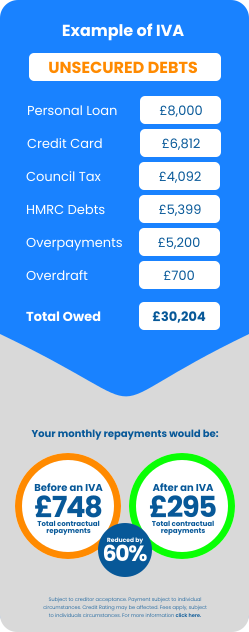
At PennyPlan, we provide tailored advice that helps you reach the best outcome for your financial situation. Our friendly specialists can talk you through your options, whether you’re considering an IVA, a debt management plan (DMP), or a debt relief order (DRO). Or you just need some guidance from experts on how you can make progress towards paying off your debt.
If you’re feeling overwhelmed by debt or financial uncertainty, you don’t have to navigate your options alone. To discuss your situation further, please don’t hesitate to get in touch with us today and take the first steps towards stress-free financial stability.