
Klarna has become part of everyday spending for a lot of people in the UK. You see it at checkout, offering to split the cost into smaller payments or delay it for a few weeks. It feels simple. Low pressure.
Because of that, it doesn’t always feel like traditional borrowing.
That’s where the confusion starts. People often assume it either has no impact at all or that it automatically damages their credit score.
The reality sits somewhere in the middle.
Klarna can affect your credit score, but not in every situation and not in the same way as a loan or credit card. The outcome depends on the type of agreement and how it’s managed.
How Klarna Credit Checks Work
When you choose a Klarna payment option, the system may check your credit file. What happens next depends on the product you select.
For short-term options such as Pay in 3 or Pay in 30 days, Klarna usually carries out a soft credit check. Soft searches don’t reduce your credit score and other lenders can’t see them. They’re mainly used to confirm identity and assess basic risk.
Longer-term finance agreements are different. If you spread payments over a longer period, Klarna may run a hard credit check. Hard searches are recorded on your credit file and visible to other lenders.
One hard check on its own rarely causes significant issues, but several in a short space of time can influence lending decisions.
So simply using Klarna doesn’t automatically lower your score. It depends on the structure of the agreement.
Does Klarna Show on Your Credit File?
Buy Now Pay Later reporting has changed over the past few years. Klarna now shares more information with UK credit reference agencies than it did previously.
Depending on the product and reporting arrangements, lenders may be able to see:
- Active Klarna agreements
- Outstanding balances
- Missed payments
Not every transaction appears in the same way, and reporting can vary. What matters is that Klarna is no longer invisible.
If payments are missed, that information can be recorded. If payments are made on time, there’s usually little negative impact. The risk increases when repayments slip or several agreements overlap.
Can Klarna Lower Your Credit Score?
Klarna doesn’t reduce your credit score just because you’ve used it. What affects your credit profile is your repayment activity.
Missed payments, late payments and accounts falling into arrears can all leave negative markers. If an account defaults, that record can remain on your credit file for six years.
That can influence future applications for loans, credit cards and even some mobile contracts.
There’s also a broader picture lenders consider. Frequent short-term borrowing across multiple retailers can raise questions about affordability, even if payments are technically up to date.
Someone using Klarna occasionally for planned purchases presents differently to someone relying on it regularly.
What Happens If You Miss a Klarna Payment?
If a payment is missed, Klarna usually sends reminders first. Depending on the agreement, late fees may apply.
If the balance remains unpaid, the account can move into arrears. Continued non-payment may lead to the debt being passed to a collection agency.
At that stage, a default could be registered on your credit file.
The original purchase amount doesn’t protect you from that outcome. Credit files reflect repayment behaviour, not the size of the shopping basket.
Ignoring missed payments tends to make the situation more difficult. Early communication usually gives you more options.
Does Klarna Affect Mortgage Applications?
Mortgage lenders take a detailed look at your financial position. Occasional Klarna use with consistent repayments is unlikely to block a mortgage application on its own.
However, multiple active Buy Now Pay Later agreements can reduce disposable income on paper. That affects affordability calculations.
Lenders may review:
- The number of active short-term credit agreements
- Total outstanding balances
- Recent missed payments
- Patterns of borrowing in the months leading up to the application
If you’re planning to apply for a mortgage, it can help to reduce overlapping short-term borrowing beforehand.
Is Klarna a Form of Debt?
Yes. Klarna is regulated credit. It may feel different from a credit card because each purchase is separate and the instalments can seem smaller.
But it’s still borrowing money that must be repaid under agreed terms.
Small instalments can be easy to manage in isolation. When several agreements run at the same time, the combined repayment total becomes more noticeable.
If Klarna is being used alongside credit cards, overdrafts or loans, it’s worth stepping back and looking at your full financial picture.
If Klarna balances are becoming difficult to manage, you can read more about how these debts are treated and what formal options involve in our Klarna debt help guide.
Struggling With Klarna or Other Buy Now Pay Later Debts?
Klarna on its own doesn’t automatically damage your credit score. The difficulty usually starts when repayments overlap, payments are missed, or short-term borrowing becomes part of everyday spending.
If you’ve started to see missed payments, rising balances or pressure building across multiple accounts, it’s worth getting clarity sooner rather than later.
PennyPlan offers free, confidential advice to help you understand:
- Whether a Debt Management Plan would make repayments more manageable
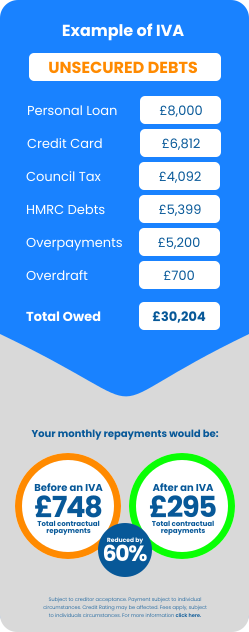
- If an IVA could reduce overall pressure
- Or whether another option would suit your situation better
If Klarna or other Buy Now Pay Later debts are affecting your credit file or stretching your budget, speak to PennyPlan today and find out what realistic support could look like for you.